Pelvic Floor Therapy Years After Childbirth: Is It Too Late?
If you've ever thought:
"My baby is already in middle school school."
"My youngest just got their driver's license."
"I've had these symptoms for years."
You're not alone.
Many women assume that if they were going to address pelvic floor symptoms after having children, they should have done it immediately postpartum. As the years pass, it can start to feel like leaking, pelvic pain, pressure, or discomfort are simply things they'll have to live with.
The good news? It is rarely too late to benefit from pelvic floor therapy years after childbirth.
Whether your child is six months old, six years old, or twenty-six years old, pelvic floor physical therapy can help improve function, reduce symptoms, and help you feel more confident in your body.
Why Do Pelvic Floor Problems Sometimes Show Up Years After Childbirth?
Many women notice symptoms shortly after pregnancy and delivery. Others feel relatively fine for years before symptoms begin to appear.
Pregnancy and childbirth place significant demands on the pelvic floor muscles, connective tissues, and core. Even when recovery goes smoothly, those structures may remain more vulnerable to future stressors.
Symptoms can appear years later due to:
Aging and natural changes in muscle strength
Hormonal shifts during perimenopause and menopause
Chronic constipation or straining
Repetitive lifting
Increased exercise or activity levels
Weight fluctuations
Ongoing stress and muscle tension
For many women, it isn't that something suddenly "went wrong." Rather, the body reaches a point where it can no longer compensate for underlying dysfunction.
Common Pelvic Floor Problems Years After Childbirth
Urinary Leakage
Do you leak when you cough, sneeze, laugh, run, or jump?
Many women assume bladder leakage is simply part of motherhood or aging. While common, it is not something you have to accept as normal.
Pelvic Pressure or Prolapse
Some women experience a feeling of heaviness, pressure, or a sensation that something is falling out of the vagina.
These symptoms may be related to pelvic organ prolapse, which can develop or worsen years after childbirth.
Pain During Intimacy
Pain during intercourse is another common but often overlooked symptom of pelvic floor dysfunction. Tight, weak, or poorly coordinated pelvic floor muscles can contribute to discomfort and make intimacy less enjoyable.
Constipation and Bowel Dysfunction
The pelvic floor plays an important role in bowel function. Difficulty emptying the bowels, straining, or chronic constipation may be related to pelvic floor muscle dysfunction.
Pelvic Pain
Pelvic pain can occur in the pelvis itself, but it may also be felt in the hips, lower back, abdomen, or tailbone. Some women develop increased pelvic floor tension over time, which can contribute to pain and discomfort.
Core Weakness
Pregnancy affects both the pelvic floor and the abdominal muscles. Years later, some women still struggle with core weakness, decreased stability, or difficulty returning to activities they enjoy.
The Biggest Myth: “I’ve Had This Too Long to Fix It.”
One of the most common things we hear is:
"I wish I had come sooner."
Many women spend years adapting their lives around their symptoms.
They wear pads every day.
They avoid exercise.
They stop jumping on the trampoline with their children.
They plan outings around bathroom access.
They avoid intimacy because of pain or discomfort.
Over time, these adjustments can start to feel normal.
But just because something is common does not mean it is normal.
The length of time you've had symptoms does not necessarily determine whether they can improve.
Can Pelvic Floor Therapy Help Years After Birth?
Yes.
Pelvic floor physical therapy focuses on improving the function of the pelvic floor muscles, core, breathing mechanics, posture, and movement patterns.
Depending on your symptoms, treatment may include:
Strengthening weak muscles
Relaxing overactive or tight muscles
Improving muscle coordination
Breathing and pressure management strategies
Postural education
Manual therapy techniques
Home exercises tailored to your goals
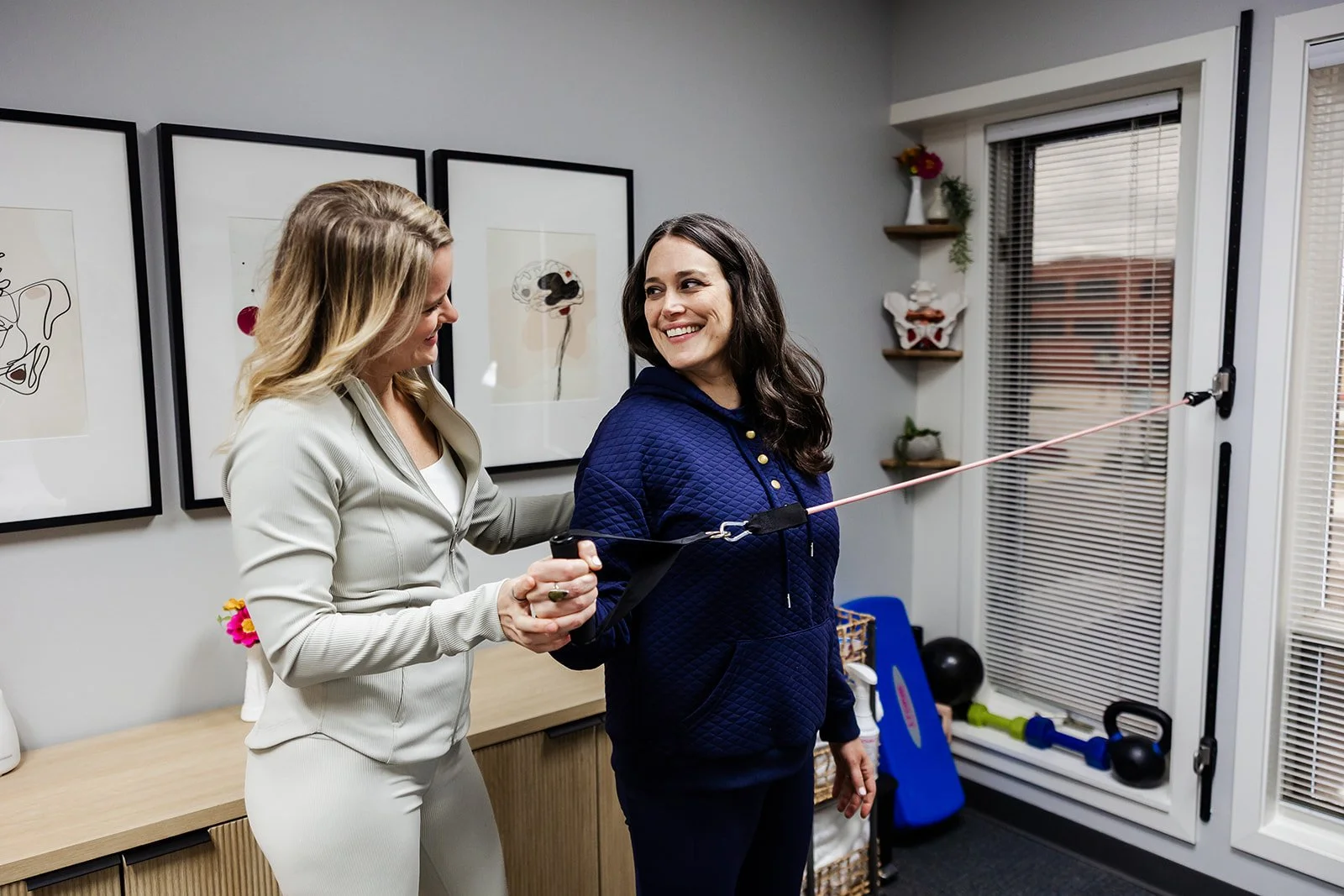
At Chicago Mama Physical Therapy, we take a whole-body approach because pelvic floor symptoms are rarely caused by a single issue.
Our goal is to identify the root cause of your symptoms and create a personalized treatment plan that supports lasting improvement.
What If I’m in Perimenopause or Menopause?
Many women first notice pelvic floor symptoms—or notice existing symptoms becoming worse—during perimenopause and menopause.
As estrogen levels decline, tissues throughout the pelvic region can become less supported, less elastic, and more sensitive. This can contribute to urinary symptoms, pelvic heaviness, discomfort with intimacy, and other pelvic floor concerns.
If your symptoms seem to have appeared years after childbirth, hormonal changes may be one piece of the puzzle.
The good news is that pelvic floor therapy can still play an important role in helping you improve comfort, strength, and confidence during this stage of life.
What to Expect at Chicago Mama Physical Therapy
If you're considering pelvic floor therapy years after childbirth, know that you are not alone.
At Chicago Mama Physical Therapy, we provide:
One-on-one, hour-long sessions
A private, tranquil treatment room
Consistent care with the same therapist each visit
A specialist trained in pelvic health and pregnancy/postpartum care
A whole-body treatment approach tailored to your goals
Whether you've been dealing with symptoms for months or decades, we'll meet you where you are and help you create a roadmap toward feeling better. Curious about what your first visit will look like? Learn more about what to expect at your first pelvic floor physical therapy appointment: https://www.chicagomamapt.com/blog/first-pelvic-floor-physical-therapy-appointment.
Next Steps for Healing
If you're experiencing pelvic floor problems years after childbirth, it is not too late to seek help.
Schedule your free discovery call to learn how pelvic floor therapy can support your recovery and help you get back to the activities you love.
If you're in Barrington, IL or the surrounding Northwest suburbs, visit chicagomamapt.com/contact or call 312.554.5146.